02/07/2014

Cuba - Old Havana and its Fortification System

Havana was founded in 1519 by the Spanish. By the 17th century, it had become one of the Caribbean's main centres for ship-building. Although it is today a sprawling metropolis of 2 million inhabitants, its old centre retains an interesting mix of Baroque and neoclassical monuments, and a homogeneous ensemble of private houses with arcades, balconies, wrought-iron gates and internal courtyards.

Year of inscription: 1982
further Informations: http://whc.unesco.org/en/list/204

Old Havana and its Fortification System


30/06/2014

Mongolia - Orkhon Valley Cultural Landscape

The 121,967-ha Orkhon Valley Cultural Landscape encompasses an extensive area of pastureland on both banks of the Orkhon River and includes numerous archaeological remains dating back to the 6th century. The site also includes Kharkhorum, the 13th- and 14th-century capital of Chingis (Genghis) Khan’s vast Empire. Collectively the remains in the site reflect the symbiotic links between nomadic, pastoral societies and their administrative and religious centres, and the importance of the Orkhon valley in the history of central Asia. The grassland is still grazed by Mongolian nomadic pastoralists

Year of Inscription: 2004
further Informations: http://whc.unesco.org/en/list/1081

Orkhon Valley Cultural Landscape


29/06/2014

China - Mount Emei Scenic Area, including Leshan Giant Buddha Scenic Area

The first Buddhist temple in China was built here in Sichuan Province in the 1st century A.D. in the beautiful surroundings of the summit Mount Emei. The addition of other temples turned the site into one of Buddhism's holiest sites. Over the centuries, the cultural treasures grew in number. The most remarkable is the Giant Buddha of Leshan, carved out of a hillside in the 8th century and looking down on the confluence of three rivers. At 71 m high, it is the largest Buddha in the world. Mount Emei is also notable for its exceptionally diverse vegetation, ranging from subtropical to subalpine pine forests. Some of the trees there are more than 1,000 years old.

Year of Inscription: 1996
http://whc.unesco.org/en/list/779

Mount Emei Scenic Area, including Leshan Giant Buddha Scenic Area

Mount Emei Scenic Area, including Leshan Giant Buddha Scenic Area

Mount Emei Scenic Area, including Leshan Giant Buddha Scenic Area

28/06/2014

China - Lushan National Park - China

Mount Lushan, in Jiangxi, is one of the spiritual centres of Chinese civilization. Buddhist and Taoist temples, along with landmarks of Confucianism, where the most eminent masters taught, blend effortlessly into a strikingly beautiful landscape which has inspired countless artists who developed the aesthetic approach to nature found in Chinese culture.

Date of Inscription: 1996
http://whc.unesco.org/en/list/778

Lushan National Park

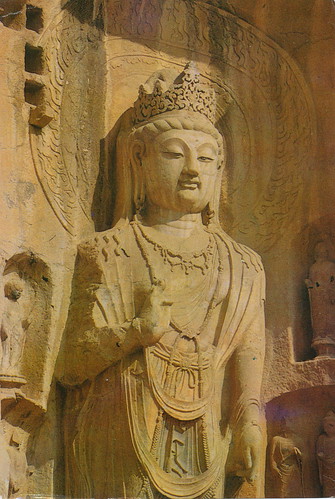
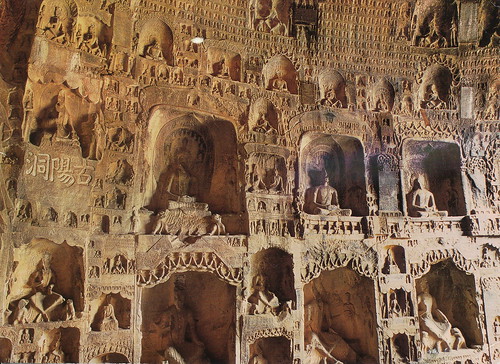
China - Longmen Grottoes

The grottoes and niches of Longmen contain the largest and most impressive collection of Chinese art of the late Northern Wei and Tang Dynasties (316-907). These works, entirely devoted to the Buddhist religion, represent the high point of Chinese stone carving.

Date of Inscription: 2000
http://whc.unesco.org/en/list/1003


Longmen Grottoes

Longmen Grottoes

Longmen Grottoes

Longmen Grottoes

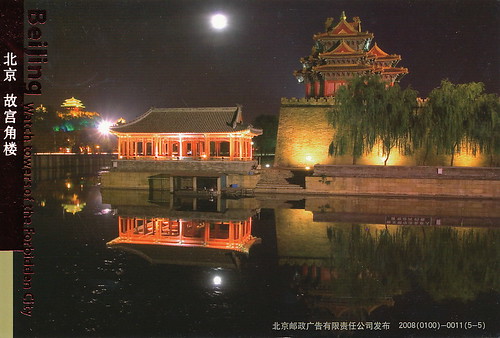
China - Imperial Palaces of the Ming and Qing Dynasties in Beijing and Shenyang - China

Seat of supreme power for over five centuries (1416-1911), the Forbidden City in Beijing, with its landscaped gardens and many buildings (whose nearly 10,000 rooms contain furniture and works of art), constitutes a priceless testimony to Chinese civilization during the Ming and Qing dynasties. The Imperial Palace of the Qing Dynasty in Shenyang consists of 114 buildings constructed between 1625–26 and 1783. It contains an important library and testifies to the foundation of the last dynasty that ruled China, before it expanded its power to the centre of the country and moved the capital to Beijing. This palace then became auxiliary to the Imperial Palace in Beijing. This remarkable architectural edifice offers important historical testimony to the history of the Qing Dynasty and to the cultural traditions of the Manchu and other tribes in the north of China.

Date of Inscription: 1987
http://whc.unesco.org/en/list/439


Imperial Palaces of the Ming and Qing Dynasties in Beijing and Shenyang


 rec Aug 2011 // China x OC RR from julia_jery


This Post is Part from the Sunday Stamp Blog - especially the chinese stamps. I always like to get chinese postcard due to the stamps :) They are always big and colorful and the marks are most of the time blotted... sometimes i also wish i could read chinese... coz otherwise i've never an idea what the stamps are showing... 


China - Historic Ensemble of the Potala Palace, Lhasa

The Potala Palace, winter palace of the Dalai Lama since the 7th century, symbolizes Tibetan Buddhism and its central role in the traditional administration of Tibet. The complex, comprising the White and Red Palaces with their ancillary buildings, is built on Red Mountain in the centre of Lhasa Valley, at an altitude of 3,700m. Also founded in the 7th century, the Jokhang Temple Monastery is an exceptional Buddhist religious complex. Norbulingka, the Dalai Lama's former summer palace, constructed in the 18th century, is a masterpiece of Tibetan art. The beauty and originality of the architecture of these three sites, their rich ornamentation and harmonious integration in a striking landscape, add to their historic and religious interest.

year of Inscription: 1994
further Informations: http://whc.unesco.org/en/list/707

Historic Ensemble of the Potala Palace, Lhasa

Historic Ensemble of the Potala Palace, Lhasa

China - Historic Centre of Macao

Macao, a lucrative port of strategic importance in the development of international trade, was under Portuguese administration from the mid-16th century until 1999, when it came under Chinese sovereignty. With its historic street, residential, religious and public Portuguese and Chinese buildings, the historic centre of Macao provides a unique testimony to the meeting of aesthetic, cultural, architectural and technological influences from East and West. The site also contains a fortress and a lighthouse, the oldest in China. It bears witness to one of the earliest and longest-lasting encounters between China and the West, based on the vibrancy of international trade.

Year of Inscription: 2005
further Informations: http://whc.unesco.org/en/list/1110

Historic Centre of Macao

CN - Historic Centre of Macao

Historic Centre of Macao

Historic Centre of Macao

China - Fujian Tulou

Fujian Tulou is a property of 46 buildings constructed between the 15th and 20th centuries over 120 km in south-west of Fujian province, inland from the Taiwan Strait. Set amongst rice, tea and tobacco fields the Tulou are earthen houses. Several storeys high, they are built along an inward-looking, circular or square floor plan as housing for up to 800 people each. They were built for defence purposes around a central open courtyard with only one entrance and windows to the outside only above the first floor. Housing a whole clan, the houses functioned as village units and were known as “a little kingdom for the family” or “bustling small city.” They feature tall fortified mud walls capped by tiled roofs with wide over-hanging eaves. The most elaborate structures date back to the 17th and 18th centuries. The buildings were divided vertically between families with each disposing of two or three rooms on each floor. In contrast with their plain exterior, the inside of the tulou were built for comfort and were often highly decorated. They are inscribed as exceptional examples of a building tradition and function exemplifying a particular type of communal living and defensive organization, and, in terms of their harmonious relationship with their environment, an outstanding example of human settlement.

Year of Inscription: 2008
further Informations:  http://whc.unesco.org/en/list/1113

Fujian Tulou

India - Red Fort Complex

The Red Fort Complex was built as the palace fort of Shahjahanabad – the new capital of the fifth Mughal Emperor of India, Shah Jahan. Named for its massive enclosing walls of red sandstone, it is adjacent to an older fort, the Salimgarh, built by Islam Shah Suri in 1546, with which it forms the Red Fort Complex. The private apartments consist of a row of pavilions connected by a continuous water channel, known as the Nahr-i-Behisht (Stream of Paradise). The Red Fort is considered to represent the zenith of Mughal creativity which, under the Shah Jahan, was brought to a new level of refinement. The planning of the palace is based on Islamic prototypes, but each pavilion reveals architectural elements typical of Mughal building, reflecting a fusion of Persian, Timurid and Hindu traditions The Red Fort’s innovative planning and architectural style, including the garden design, strongly influenced later buildings and gardens in Rajasthan, Delhi, Agra and further afield.

Year of Inscription: 2007
further Informations: http://whc.unesco.org/en/list/231/

Red Fort Complex