Showing posts with label 2000. Show all posts

04/08/2014

France - The Loire Valley between Sully-sur-Loire and Chalonnes

The Loire Valley is an outstanding cultural landscape of great beauty, containing historic towns and villages, great architectural monuments (the châteaux), and cultivated lands formed by many centuries of interaction between their population and the physical environment, primarily the river Loire itself.

Year of Inscription: 2000
further Informations: http://whc.unesco.org/en/list/933

The Loire Valley between Sully-sur-Loire and Chalonnes

24/07/2014

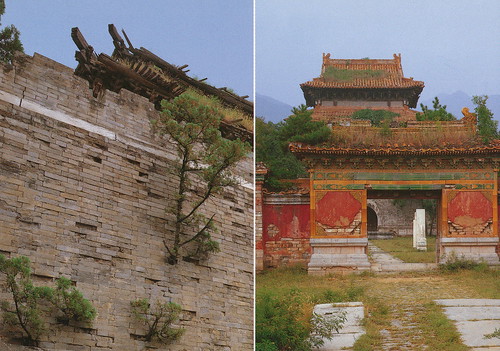
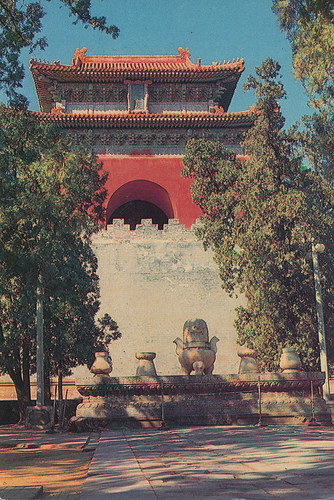
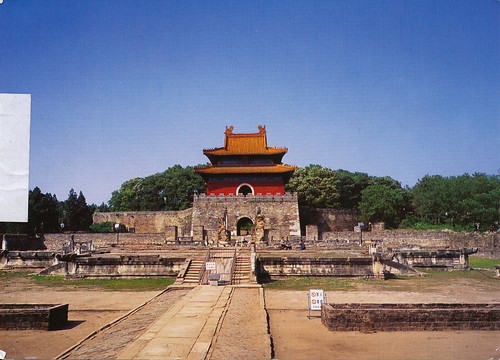
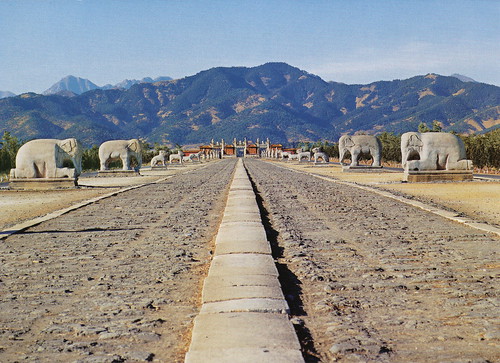
China - Imperial Tombs of the Ming and Qing Dynasties

It represents the addition of three Imperial Tombs of the Qing Dynasty in Liaoning to the Ming tombs inscribed in 2000 and 2003. The Three Imperial Tombs of the Qing Dynasty in Liaoning Province include the Yongling Tomb, the Fuling Tomb, and the Zhaoling Tomb, all built in the 17th century. Constructed for the founding emperors of the Qing Dynasty and their ancestors, the tombs follow the precepts of traditional Chinese geomancy and fengshui theory. They feature rich decoration of stone statues and carvings and tiles with dragon motifs, illustrating the development of the funerary architecture of the Qing Dynasty. The three tomb complexes, and their numerous edifices, combine traditions inherited from previous dynasties and new features of Manchu civilization.

year of Inscription: 2004
http://whc.unesco.org/en/list/1004

Imperial Tombs of the Ming and Qing Dynasties

Imperial Tombs of the Ming and Qing Dynasties

Imperial Tombs of the Ming and Qing Dynasties

Imperial Tombs of the Ming and Qing Dynasties

18/07/2014

Switzerland - Three Castles, Defensive Wall and Ramparts of the Market-Town of Bellinzona

The Bellinzona site consists of a group of fortifications grouped around the castle of Castelgrande, which stands on a rocky peak looking out over the entire Ticino valley. Running from the castle, a series of fortified walls protect the ancient town and block the passage through the valley. A second castle (Montebello) forms an integral part of the fortifications, while a third but separate castle (Sasso Corbaro) was built on an isolated rocky promontory south-east of the other fortifications.

Date of Inscription: 2000
further Informations: http://whc.unesco.org/en/list/884
Visited: 2012
Three Castles, Defensive Wall and Ramparts of the Market-Town
Ch-er RR / Unesco #9 - received from Masito
Three Castles, Defensive Wall and Ramparts of the Market-Town of Bellinzona

Three Castles, Defensive Wall and Ramparts of the Market-Town of Bellinzona

Three Castles, Defensive Wall and Ramparts of the Market-Town of Bellinzona

Three Castles, Defensive Wall and Ramparts of the Market-Town of Bellinzona

Three Castles, Defensive Wall and Ramparts of the Market-Town of Bellinzona

Three Castles, Defensive Wall and Ramparts of the Market-Town of Bellinzona


Three Castles, Defensive Wall and Ramparts of the Market-Town of Bellinzona

28/06/2014

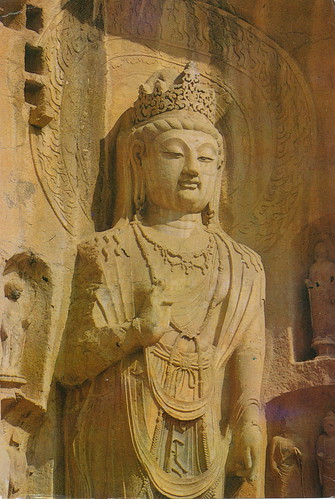
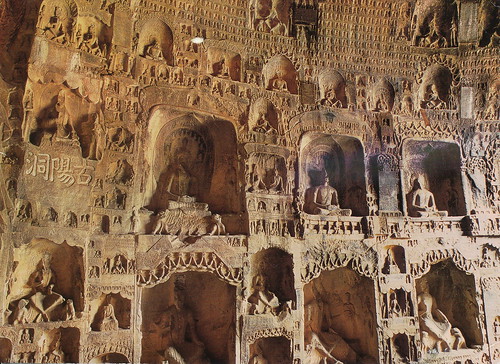
China - Longmen Grottoes

The grottoes and niches of Longmen contain the largest and most impressive collection of Chinese art of the late Northern Wei and Tang Dynasties (316-907). These works, entirely devoted to the Buddhist religion, represent the high point of Chinese stone carving.

Date of Inscription: 2000
http://whc.unesco.org/en/list/1003


Longmen Grottoes

Longmen Grottoes

Longmen Grottoes

Longmen Grottoes

24/06/2014

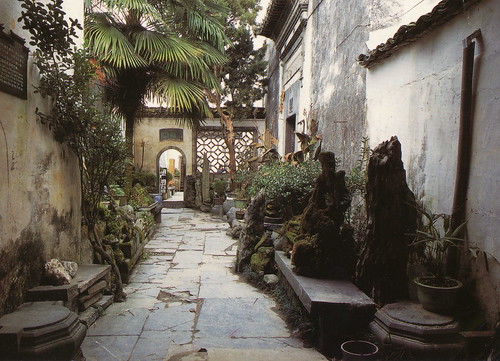
China - Ancient Villages in Southern Anhui – Xidi and Hongcun

The two traditional villages of Xidi and Hongcun preserve to a remarkable extent the appearance of non-urban settlements of a type that largely disappeared or was transformed during the last century. Their street plan, their architecture and decoration, and the integration of houses with comprehensive water systems are unique surviving examples.

Date of Inscription: 2000
further Informations: http://whc.unesco.org/en/list/1002


Ancient Villages in Southern Anhui – Xidi and Hongcun


Ancient Villages in Southern Anhui – Xidi and Hongcun

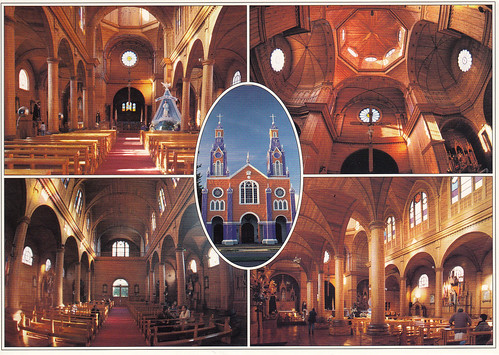
Chile - Churches of Chiloé

The Churches of Chiloé represent a unique example in Latin America of an outstanding form of ecclesiastical wooden architecture. They represent a tradition initiated by the Jesuit Peripatetic Mission in the 17th and 18th centuries, continued and enriched by the Franciscans during the 19th century and still prevailing today. These churches embody the intangible richness of the Chiloé Archipelago, and bear witness to a successful fusion of indigenous and European culture, the full integration of its architecture in the landscape and environment, as well as to the spiritual values of the communities.

Date of Inscription: 2000
further Informations: http://whc.unesco.org/en/list/971

Churches of Chiloé

Churches of Chiloé

12/06/2014

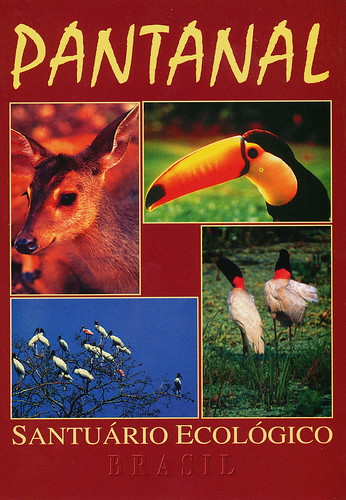
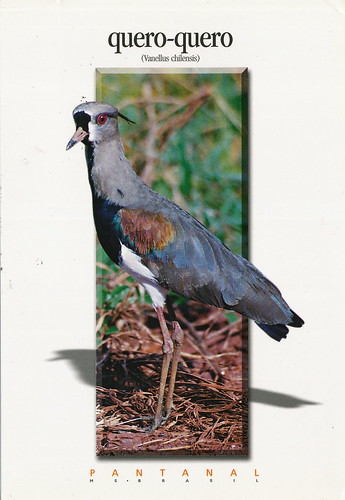
Brazil - Pantanal Conservation Area

The Pantanal Conservation Complex consists of a cluster of four protected areas with a total area of 187,818 ha. Located in western central Brazil at the south-west corner of the State of Mato Grosso, the site represents 1.3% of Brazil's Pantanal region, one of the world's largest freshwater wetland ecosystems. The headwaters of the region's two major river systems, the Cuiabá and the Paraguay rivers, are located here, and the abundance and diversity of its vegetation and animal life are spectacular.

Year of Inscription: 2000
further Informations: http://whc.unesco.org/en/list/999

Pantanal Conservation Area

Pantanal Conservation Area

04/06/2014

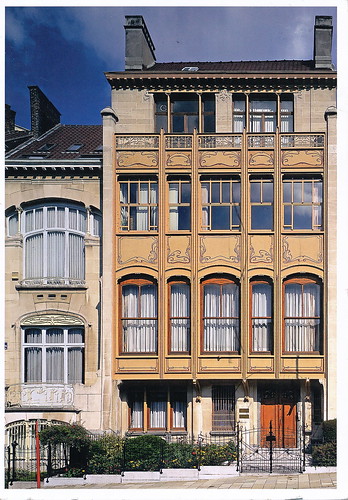
Belgium - Major Town Houses of the Architect Victor Horta (Brussels)

The four major town houses - Hôtel Tassel, Hôtel Solvay, Hôtel van Eetvelde, and Maison & Atelier Horta - located in Brussels and designed by the architect Victor Horta, one of the earliest initiators of Art Nouveau, are some of the most remarkable pioneering works of architecture of the end of the 19th century. The stylistic revolution represented by these works is characterised by their open plan, the diffusion of light, and the brilliant joining of the curved lines of decoration with the structure of the building.

Date of Inscription: 2000
further Informations: http://whc.unesco.org/en/list/1005

Major Town Houses of the Architect Victor Horta (Brussels)

29/05/2014

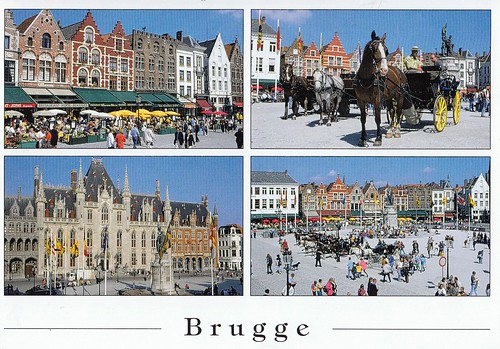
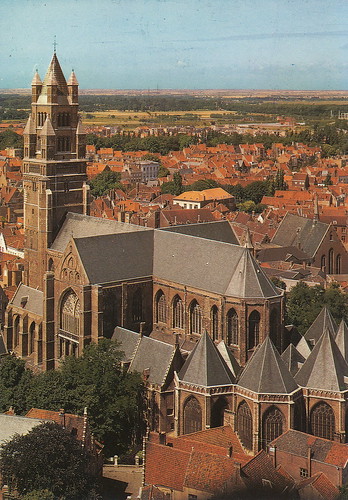
Belgium - Historic Centre of Brugge

Brugge is an outstanding example of a medieval historic settlement, which has maintained its historic fabric as this has evolved over the centuries, and where original Gothic constructions form part of the town's identity. As one of the commercial and cultural capitals of Europe, Brugge developed cultural links to different parts of the world. It is closely associated with the school of Flemish Primitive painting.

Date of Inscription: 2000
further Informations: http://whc.unesco.org/en/list/996

Historic Centre of Brugge

Historic Centre of Brugge

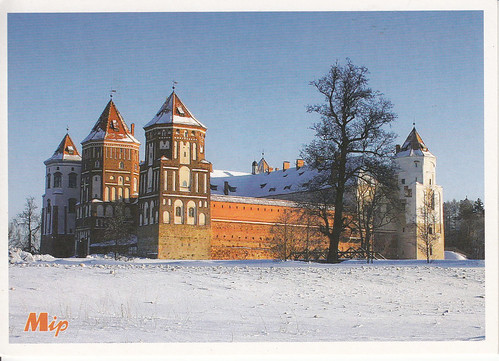
Belarus - Mir Castle Complex


The construction of this castle began at the end of the 15th century, in Gothic style. It was subsequently extended and reconstructed, first in the Renaissance and then in the Baroque style. After being abandoned for nearly a century and suffering severe damage during the Napoleonic period, the castle was restored at the end of the 19th century, with the addition of a number of other elements and the landscaping of the surrounding area as a park. Its present form is graphic testimony to its often turbulent history.

Date of Inscription: 2000

further Informations: http://whc.unesco.org/en/list/625


Mir Castle Complex


 Unesco tag - bodexs 


aprilRR - 54 - estaine


Mir Castle Complex
swapbot - felis
Mir Castle Complex
OctoberRR - 07 - coralfish
Mir Castle Complex
MayRR - 11 - crexcrex


Mir Castle Complex
BY-501631
Mir Castle Complex

04/03/2014

Australia - Greater Blue Mountains - Australia

The Greater Blue Mountains Area consists of 1.03 million ha of sandstone plateaux, escarpments and gorges dominated by temperate eucalypt forest. The site, comprised of eight protected areas, is noted for its representation of the evolutionary adaptation and diversification of the eucalypts in post-Gondwana isolation on the Australian continent. Ninety-one eucalypt taxa occur within the Greater Blue Mountains Area which is also outstanding for its exceptional expression of the structural and ecological diversity of the eucalypts associated with its wide range of habitats. The site provides significant representation of Australia's biodiversity with ten percent of the vascular flora as well as significant numbers of rare or threatened species, including endemic and evolutionary relict species, such as the Wollemi pine, which have persisted in highly-restricted microsites.

Year of Inscription: 2000
further Informations: http://whc.unesco.org/en/list/917

Greater Blue Mountains Area
AU-239935

Greater Blue Mountains Area
unwritten

Greater Blue Mountains Area
private swap with crankypants

Greater Blue Mountains Area
JanuaryRR - Aussiebear

Greater Blue Mountains Area
Join any Topics RR - Aussiebear

Greater Blue Mountains Area
unwritten

26/02/2014

Austria - Wachau Cultural Landscape

The Wachau is a stretch of the Danube Valley between Melk and Krems, a landscape of high visual quality. It preserves in an intact and visible form many traces - in terms of architecture, (monasteries, castles, ruins), urban design, (towns and villages), and agricultural use, principally for the cultivation of vines - of its evolution since prehistoric times.

Date of Inscription: 2000

further Informations: http://whc.unesco.org/en/list/970

Wachau Cultural Landscape
RAS from Nina
Wachau Cultural Landscape
Andrea

15/11/2013

Viet Nam - Ha Long Bay

Ha Long Bay, in the Gulf of Tonkin, includes some 1,600 islands and islets, forming a spectacular seascape of limestone pillars. Because of their precipitous nature, most of the islands are uninhabited and unaffected by a human presence. The site's outstanding scenic beauty is complemented by its great biological interest.

Date of Inscription: 2000

further Informations: http://whc.unesco.org/en/list/672


12951 - Ha Long Bay

Ha Long Bay
private swap with johnson
Ha Long Bay
JP-189135
Ha Long Bay
TW-59992

28/08/2013

Lesotho - South Africa - Maloti-Drakensberg Park

The uKhahlamba Drakensberg Park is renowned for its spectacular natural landscape, importance as a haven for many threatened and endemic species, and for its wealth of rock paintings made by the San people over a period of 4000 years. The Park, located in the Drakensberg Mountains, covers an area of 242,813 ha making it the largest protected area along the Great Escarpment of southern Africa. With its pristine steep-sided river valleys and rocky gorges, the property has numerous caves and rock shelters containing an estimated 600 rock art sites, and the number of individual images in those sites probably exceeds 35,000. The images depict animals and human beings, and represent the spiritual life of this people, now no longer living in their original homeland. This art represents an exceptionally coherent tradition that embodies the beliefs and cosmology of the San people over several millennia. There are also paintings done during the nineteenth and twentieth centuries, attributable to Bantu speaking people.

Date of Inscription: 2000
Extension: 2013
further Informations: http://whc.unesco.org/en/list/985
Maloti-Drakensberg Park

Maloti-Drakensberg Park

20/08/2013

Spain - Roman Walls of Lugo

The walls of Lugo were built in the later part of the 3rd century to defend the Roman town of Lucus. The entire circuit survives intact and is the finest example of late Roman fortifications in western Europe.

Date of Inscription: 2000
further Informations: http://whc.unesco.org/en/list/987


Roman Walls of Lugo
UnescoTag - Betariz