Showing posts with label 1987. Show all posts

02/08/2014

China - Peking Man Site at Zhoukoudian

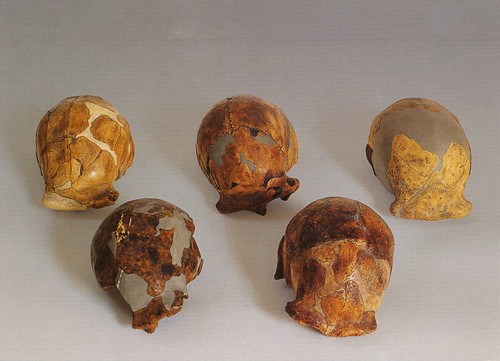
Scientific work at the site, which lies 42 km south-west of Beijing, is still underway. So far, it has led to the discovery of the remains of Sinanthropus pekinensis, who lived in the Middle Pleistocene, along with various objects, and remains of Homo sapiens sapiens dating as far back as 18,000–11,000 B.C. The site is not only an exceptional reminder of the prehistorical human societies of the Asian continent, but also illustrates the process of evolution.

Year of Inscription: 1987
http://whc.unesco.org/en/list/449
Peking Man Site at Zhoukoudian

18/07/2014

USA - Chaco Culture

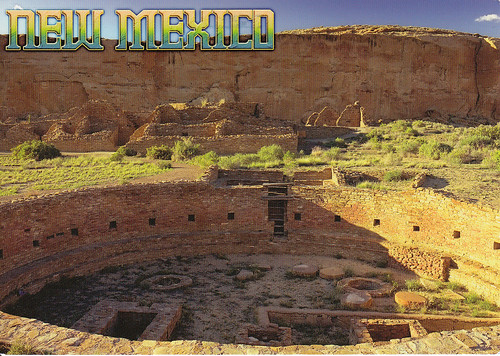
For over 2,000 years, Pueblo peoples occupied a vast region of the south-western United States. Chaco Canyon, a major centre of ancestral Pueblo culture between 850 and 1250, was a focus for ceremonials, trade and political activity for the prehistoric Four Corners area. Chaco is remarkable for its monumental public and ceremonial buildings and its distinctive architecture – it has an ancient urban ceremonial centre that is unlike anything constructed before or since. In addition to the Chaco Culture National Historical Park, the World Heritage property includes the Aztec Ruins National Monument and several smaller Chaco sites managed by the Bureau of Land Management.

Date of Inscription: 1987
further Informations: http://whc.unesco.org/en/list/353


Chaco Culture

Chaco Culture
private swap with nowaglas

28/06/2014

China - Imperial Palaces of the Ming and Qing Dynasties in Beijing and Shenyang - China

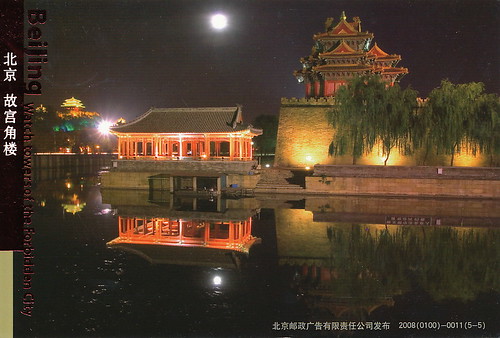
Seat of supreme power for over five centuries (1416-1911), the Forbidden City in Beijing, with its landscaped gardens and many buildings (whose nearly 10,000 rooms contain furniture and works of art), constitutes a priceless testimony to Chinese civilization during the Ming and Qing dynasties. The Imperial Palace of the Qing Dynasty in Shenyang consists of 114 buildings constructed between 1625–26 and 1783. It contains an important library and testifies to the foundation of the last dynasty that ruled China, before it expanded its power to the centre of the country and moved the capital to Beijing. This palace then became auxiliary to the Imperial Palace in Beijing. This remarkable architectural edifice offers important historical testimony to the history of the Qing Dynasty and to the cultural traditions of the Manchu and other tribes in the north of China.

Date of Inscription: 1987
http://whc.unesco.org/en/list/439


Imperial Palaces of the Ming and Qing Dynasties in Beijing and Shenyang


 rec Aug 2011 // China x OC RR from julia_jery


This Post is Part from the Sunday Stamp Blog - especially the chinese stamps. I always like to get chinese postcard due to the stamps :) They are always big and colorful and the marks are most of the time blotted... sometimes i also wish i could read chinese... coz otherwise i've never an idea what the stamps are showing... 


24/06/2014

Canada - Gros Morne National Park

Situated on the west coast of the island of Newfoundland, the park provides a rare example of the process of continental drift, where deep ocean crust and the rocks of the earth's mantle lie exposed. More recent glacial action has resulted in some spectacular scenery, with coastal lowland, alpine plateau, fjords, glacial valleys, sheer cliffs, waterfalls and many pristine lakes.

Year of inscription: 1987
further Informations: http://whc.unesco.org/en/list/419

Gros Morne National Park


31/05/2014

Brazil - Brasilia

Brasilia, a capital created ex nihilo in the centre of the country in 1956, was a landmark in the history of town planning. Urban planner Lucio Costa and architect Oscar Niemeyer intended that every element – from the layout of the residential and administrative districts (often compared to the shape of a bird in flight) to the symmetry of the buildings themselves – should be in harmony with the city’s overall design. The official buildings, in particular, are innovative and imaginative.

Date of Inscription: 1987
further Informations: http://whc.unesco.org/en/list/445


10/02/2014

USA - Monticello and the University of Virginia in Charlottesville

Thomas Jefferson (1743–1826), author of the American Declaration of Independence and third president of the United States, was also a talented architect of neoclassical buildings. He designed Monticello (1769–1809), his plantation home, and his ideal 'academical village' (1817–26), which is still the heart of the University of Virginia. Jefferson's use of an architectural vocabulary based upon classical antiquity symbolizes both the aspirations of the new American republic as the inheritor of European tradition and the cultural experimentation that could be expected as the country matured. 

Date of Inscription: 1987 
further Informations: http://whc.unesco.org/en/list/442

Monticello and the University of Virginia in Charlottesville
WriteBackRR - 116 - Postmuse


private facebook swap with laura hall


Monticello and the University of Virginia in Charlottesville
I'm going to vacation #318 - meena7
Monticello and the University of Virginia in Charlottesville
Unesco WHC swap #9 - judee

16/11/2013

Turkey - Nemrut Dağ

The mausoleum of Antiochus I (69–34 B.C.), who reigned over Commagene, a kingdom founded north of Syria and the Euphrates after the breakup of Alexander's empire, is one of the most ambitious constructions of the Hellenistic period. The syncretism of its pantheon, and the lineage of its kings, which can be traced back through two sets of legends, Greek and Persian, is evidence of the dual origin of this kingdom's culture.

Year of Inscription: 1987
further Informations: http://whc.unesco.org/en/list/448

   Nemrut Dağ


14/07/2013

Spain - Cathedral, Alcázar and Archivo de Indias in Seville

Together these three buildings form a remarkable monumental complex in the heart of Seville. The cathedral and the Alcázar – dating from the Reconquest of 1248 to the 16th century and imbued with Moorish influences – are an exceptional testimony to the civilization of the Almohads as well as that of Christian Andalusia. The Giralda minaret is the masterpiece of Almohad architecture. It stands next to the cathedral with its five naves; the largest Gothic building in Europe, it houses the tomb of Christopher Columbus. The ancient Lonja, which became the Archivo de Indias, contains valuable documents from the archives of the colonies in the Americas. 

 Date of Inscription: 1987 
further Informations: http://whc.unesco.org/en/list/383

private Card
2nd hand card 
CAthedral, Alcázar and Archivo de Indias in Seville
BIG Unesco RR #7 from cesar


13/07/2013

Greece - Acropolis, Athens

The Acropolis of Athens and its monuments are universal symbols of the classical spirit and civilization and form the greatest architectural and artistic complex bequeathed by Greek Antiquity to the world. In the second half of the fifth century bc, Athens, following the victory against the Persians and the establishment of democracy, took a leading position amongst the other city-states of the ancient world. In the age that followed, as thought and art flourished, an exceptional group of artists put into effect the ambitious plans of Athenian statesman Pericles and, under the inspired guidance of the sculptor Pheidias, transformed the rocky hill into a unique monument of thought and the arts. The most important monuments were built during that time: the Parthenon, built by Ictinus, the Erechtheon, the Propylaea, the monumental entrance to the Acropolis, designed by Mnesicles and the small temple Athena Nike.

Date of Inscription: 1987


Acropolis, Greece
Postcard 1: Philatelic RR #336 - received from Sofia_art
Acropolis, Athens
Postcard 2: unwritten from a private swap 
Acropolis, Athens
TouristPC - melimar

12/07/2013

United Kingdom - Palace of Westminster and Westminster Abbey including Saint Margaret’s Church

Westminster Palace, rebuilt from the year 1840 on the site of important medieval remains, is a fine example of neo-Gothic architecture. The site – which also comprises the small medieval Church of Saint Margaret, built in Perpendicular Gothic style, and Westminster Abbey, where all the sovereigns since the 11th century have been crowned – is of great historic and symbolic significance.

Date of Inscription: 1987
further Informations: http://whc.unesco.org/en/list/426/

Palace of Westminster and Westminster Abbey including Saint Margaret’s Church
unwritten

Germany - United Kingdom - Frontiers of the Roman Empire

More views from Limes are always welcome!

The ‘Roman Limes’ represents the border line of the Roman Empire at its greatest extent in the 2nd century AD. It stretched over 5,000 km from the Atlantic coast of northern Britain, through Europe to the Black Sea, and from there to the Red Sea and across North Africa to the Atlantic coast. The remains of the Limes today consist of vestiges of built walls, ditches, forts, fortresses, watchtowers and civilian settlements. Certain elements of the line have been excavated, some reconstructed and a few destroyed. The two sections of the Limes in Germany cover a length of 550 km from the north-west of the country to the Danube in the south-east. The 118-km-long Hadrian’s Wall (UK) was built on the orders of the Emperor Hadrian c. AD 122 at the northernmost limits of the Roman province of Britannia. It is a striking example of the organization of a military zone and illustrates the defensive techniques and geopolitical strategies of ancient Rome. The Antonine Wall, a 60-km long fortification in Scotland was started by Emperor Antonius Pius in 142 AD as a defense against the “barbarians” of the north. It constitutes the northwestern-most portion of the Roman Limes.

Date of Inscription: 1987
Extension:  2005,2008

China x OC RR 25 - rec from gerschjg in Aug 2011. The card shows the Römerkastell Saalburg in Bad Homburg


Frontiers of the Roman Empire
received from AndyHousesteads mile fort, northumberland

United Kingdom - City of Bath

Founded by the Romans as a thermal spa, Bath became an important centre of the wool industry in the Middle Ages. In the 18th century, under George III, it developed into an elegant town with neoclassical Palladian buildings, which blend harmoniously with the Roman baths.

Date of Inscription: 1987
further Informations: http://whc.unesco.org/en/list/428

City of Bath
UK x oc RR # 218received from duplevista


City of Bath
FB Swap with Anu

USA - Hawaii Volcanoes National Park

This site contains two of the most active volcanoes in the world, Mauna Loa (4,170 m high) and Kilauea (1,250 m high), both of which tower over the Pacific Ocean. Volcanic eruptions have created a constantly changing landscape, and the lava flows reveal surprising geological formations. Rare birds and endemic species can be found there, as well as forests of giant ferns.

Date of Inscription: 1987
Hawaii Volcanoes National Park
US-2240911


Hawaii Volcanoes National Park #
unwritten

25/01/2012

Italy - Venice and its Lagoon

Founded in the 5th century and spread over 118 small islands, Venice became a major maritime power in the 10th century. The whole city is an extraordinary architectural masterpiece in which even the smallest building contains works by some of the world's greatest artists such as Giorgione, Titian, Tintoretto, Veronese and others.
Date of Inscription: 1987


Postcard 1: rec 07 Oct 2011 - October RR from edo - Isola di San Giorgio Maggiore 


unesco_0019


07/12/2011

India - Elephanta Caves

The 'City of Caves', on an island in the Sea of Oman close to Bombay, contains a collection of rock art linked to the cult of Shiva. Here, Indian art has found one of its most perfect expressions, particularly the huge high reliefs in the main cave.

Date of Inscription: 1987

Postcard 1: private swap with sita, received in november 2011


09/11/2011

Italy - Piazza del Duomo, Pisa

Standing in a large green expanse, Piazza del Duomo houses a group of monuments known the world over. These four masterpieces of medieval architecture – the cathedral, the baptistry, the campanile (the 'Leaning Tower') and the cemetery – had a great influence on monumental art in Italy from the 11th to the 14th century.


Date of Inscription: 1987
Minor modification inscribed year: 2007

Postcard 1: Official Postcrossing Card IT-130558


Piazza del Duomo, Pisa


08/11/2011

Oman - Bahla Fort

The oasis of Bahla owes its prosperity to the Banu Nebhan, the dominant tribe in the area from the 12th to the end of the 15th century. The ruins of the immense fort, with its walls and towers of unbaked brick and its stone foundations, is a remarkable example of this type of fortification and attests to the power of the Banu Nebhan.

Date of Inscription: 1987

Postcard 1: private swap with nathj92


02/10/2011

Budapest, including the Banks of the Danube, the Buda Castle Quarter and Andrássy Avenue - Hungary

I received a lot of Budapest Cards in 06-09. See other views in my flickr album: Flickr Hungary Unesco
This site has the remains of monuments such as the Roman city of Aquincum and the Gothic castle of Buda, which have had a considerable influence on the architecture of various periods. It is one of the world's outstanding urban landscapes and illustrates the great periods in the history of the Hungarian capital.

Date of Inscription: 1987
  • Extension: 2002

  • Postcard 1: Capital City offer tag from manokamoka


    Budapest, including the Banks of the Danube, the Buda Castle Quarter and Andrássy Avenue


    27/09/2011

    Hanseatic City of Lübeck - Germany

    Lübeck – the former capital and Queen City of the Hanseatic League – was founded in the 12th century and prospered until the 16th century as the major trading centre for northern Europe. It has remained a centre for maritime commerce to this day, particularly with the Nordic countries. Despite the damage it suffered during the Second World War, the basic structure of the old city, consisting mainly of 15th- and 16th-century patrician residences, public monuments (the famous Holstentor brick gate), churches and salt storehouses, remains unaltered.


    • Date of Inscription: 1987
    • Minor modification inscribed year: 2009

    Hanseatic City of Lübeck
    Unesco RR #100 - turtles

    Hanseatic City of Lübeck
    Big Unesco RR #7 - mahako

    unesco_0065 


    unesco_0066 

    unesco_0069


    25/09/2011

    China - Mogao Caves

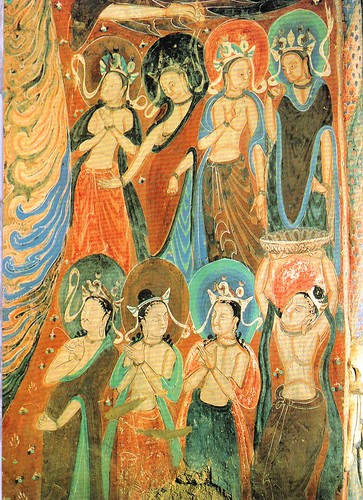
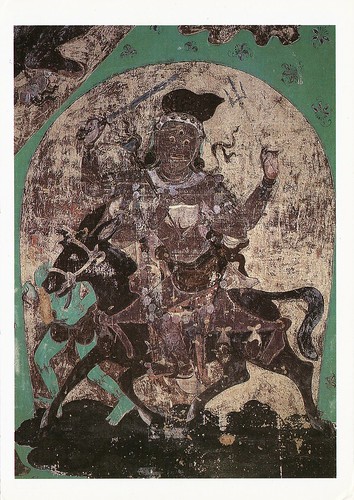
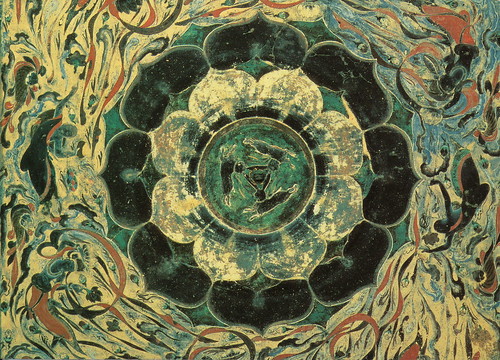
    Situated at a strategic point along the Silk Route, at the crossroads of trade as well as religious, cultural and intellectual influences, the 492 cells and cave sanctuaries in Mogao are famous for their statues and wall paintings, spanning 1,000 years of Buddhist art.

    Year of Inscription: 1987
    http://whc.unesco.org/en/list/440

    Mogao Caves

    Mogao Caves

    Mogao Caves