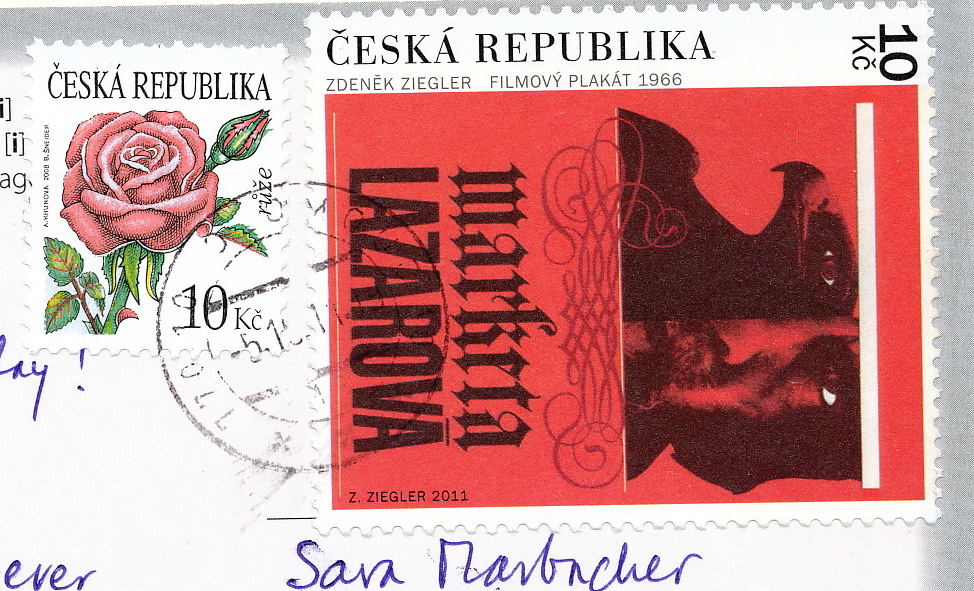
21/10/2011

Speyer Cathedral - Germany

Speyer Cathedral, a basilica with four towers and two domes, was founded by Conrad II in 1030 and remodelled at the end of the 11th century. It is one of the most important Romanesque monuments from the time of the Holy Roman Empire. The cathedral was the burial place of the German emperors for almost 300 years.

Date of Inscription: 1981

Postcard 1: Unesco Tag from sternchen84


Postcard 2: unwritten from a travelling lope in BIG UNESCO RR
 

Postcard 3: found in our 2nd hand book shop

Germany - Town of Bamberg

From the 10th century onwards, this town became an important link with the Slav peoples, especially those of Poland and Pomerania. During its period of greatest prosperity, from the 12th century onwards, the architecture of Bamberg strongly influenced northern Germany and Hungary. In the late 18th century it was the centre of the Enlightenment in southern Germany, with eminent philosophers and writers such as Hegel and Hoffmann living there.

Date of Inscription: 1993


Postcard 1:  BIG Unesco RR #21 - gerschjg


Postcard 2: rec as an official DE-946336


20/10/2011

India - Sun Temple, Konârak

On the shores of the Bay of Bengal, bathed in the rays of the rising sun, the temple at Konarak is a monumental representation of the sun god Surya's chariot; its 24 wheels are decorated with symbolic designs and it is led by a team of six horses. Built in the 13th century, it is one of India's most famous Brahman sanctuaries.

Date of Inscription: 1984

Postcard 1: rec Oct 2011 from elbe (Germany) - Built in the thirteenth century in the formof a chariot on which the sun rides through the sky daily.


Postcard 2: rec Oct 2011 from elbe (Germany) - One of the Wheels of the Chariot has minutely sculptored erotic figures.


19/10/2011

India - Group of Monuments at Mahabalipuram

This group of sanctuaries, founded by the Pallava kings, was carved out of rock along the Coromandel coast in the 7th and 8th centuries. It is known especially for its rathas(temples in the form of chariots), mandapas (cave sanctuaries), giant open-air reliefs such as the famous 'Descent of the Ganges', and the temple of Rivage, with thousands of sculptures to the glory of Shiva.

Date of Inscription: 1984 

Postcard 1: rec Oct 2011 from elbe (Germany) - Unesco missing tag. The card shows the shore temple.


Postcard 2: rec Oct 2011 from elbe (Germany) - Unesco missing tag. The card shows five rathas.


17/10/2011

Longobards in Italy. Places of the power (568-774 A.D.) - Italy

The Longobards in Italy, Places of Power, 568 - 774 A.D. comprises seven groups of important buildings (including fortresses, churches, and monasteries) throughout the Italian Peninsula. They testify to the high achievement of the Lombards, who migrated from northern Europe and developed their own specific culture in Italy where they ruled over vast territories in the 6th to 8th centuries. The Lombards synthesis of architectural styles marked the transition from Antiquity to the European Middle Ages, drawing on the heritage of Ancient Rome, Christian spirituality, Byzantine influence and Germanic northern Europe. The serial property testifies to the Lombards' major role in the spiritual and cultural development of Medieval European Christianity, notably by bolstering the monastic movement. 
Date of Inscription: 2011 


Postcard 1: rec 07 Oct 2011 via private swap from Gosia

unesco_0013


15/10/2011

Tubbataha Reefs Natural Park - Philippines

The Tubbataha Reef Marine Park covers 130,028 ha, including the North and South Reefs. It is a unique example of an atoll reef with a very high density of marine species; the North Islet serving as a nesting site for birds and marine turtles. The site is an excellent example of a pristine coral reef with a spectacular 100-m perpendicular wall, extensive lagoons and two coral islands. 
Date of Inscription: 1993


Postcard 1: rec 07 Oct 2011 - BIG UNESCO RR - from Janbonivic

unesco_0018


14/10/2011

Historic Centre of Rome, the Properties of the Holy See in that City Enjoying Extraterritorial Rights and San Paolo Fuori le Mura - Italy

Founded, according to legend, by Romulus and Remus in 753 BC, Rome was first the centre of the Roman Republic, then of the Roman Empire, and it became the capital of the Christian world in the 4th century. The World Heritage site, extended in 1990 to the walls of Urban VIII, includes some of the major monuments of antiquity such as the Forums, the Mausoleum of Augustus, the Mausoleum of Hadrian, the Pantheon, Trajan’s Column and the Column of Marcus Aurelius, as well as the religious and public buildings of papal Rome. 
Date of Inscription: 1980

Postcard 1: rec 07 octo 2011 - October RR 2011 from rita_simoes - thank you very much for sharing this beautiful b/w card with me!
unesco_0017


12/10/2011

Czech Republic - Jewish Quarter and St Procopius' Basilica in Třebíč

The ensemble of the Jewish Quarter, the old Jewish cemetery and the Basilica of St Procopius in Trebíc are reminders of the co-existence of Jewish and Christian cultures from the Middle Ages to the 20th century. The Jewish Quarter bears outstanding testimony to the different aspects of the life of this community. St Procopius Basilica, built as part of the Benedictine monastery in the early 13th century, is a remarkable example of the influence of Western European architectural heritage in this region. 

Date of Inscription: 2003

Postcard 1: rec. 07 Oct 2011 - a Birthday Card from Radim! Thank you so much for this nice surprise!
unesco_0020

Stamped on the Day of its Issue!

Indonesia - Prambanan Temple Compounds

Built in the 10th century, this is the largest temple compound dedicated to Shiva in Indonesia. Rising above the centre of the last of these concentric squares are three temples decorated with reliefs illustrating the epic of the Ramayana, dedicated to the three great Hindu divinities (Shiva, Vishnu and Brahma) and three temples dedicated to the animals who serve them.

Date of Inscription: 1991
further Informations: http://whc.unesco.org/en/list/642


Prambanan Temple Compounds
BIG Unesco RR #21 - bunana


unesco0910_0003
Many Themes RR #428 - bunana


1st post issued: 06 Oct 2011
Edited: 12 Oct 2011

Gunung Mulu National Park - Malaysia

Important both for its high biodiversity and for its karst features, Gunung Mulu National Park, on the island of Borneo in the State of Sarawak, is the most studied tropical karst area in the world. The 52,864-ha park contains seventeen vegetation zones, exhibiting some 3,500 species of vascular plants. Its palm species are exceptionally rich, with 109 species in twenty genera noted. The park is dominated by Gunung Mulu, a 2,377 m-high sandstone pinnacle. At least 295 km of explored caves provide a spectacular sight and are home to millions of cave swiftlets and bats. The Sarawak Chamber, 600 m by 415 m and 80 m high, is the largest known cave chamber in the world.
Date of Inscription: 2000

Postcard 1: rec July 2011 from SLLiew as a private swap